
Underestimating Spain
From train windows to market halls: discovering the Spain beyond the costas.

As somebody from Western Europe, it is easy to underestimate Spain as a destination. I did too. I knew it from beaches, sun and package deals, and I left it at that. Recently, I travelled through Spain for the 15th time, and I realised I had only really got to know the country once my way of travelling changed.
My first two encounters with Spain were arranged by my grandparents: Salou with the family, Mallorca with my niece. Both times I went by plane, which back then was an event in itself. My parents took us camping in France or Eastern Europe.
Then came a teenage holiday on the Costa Festiva (IYKYK), with a firm focus on beach, clubs and silly stuff. That is not Spain at all. It is a package holiday. Some people love spending their time exactly like that. Not me. But I never had the feeling there might be more behind the white walls either.
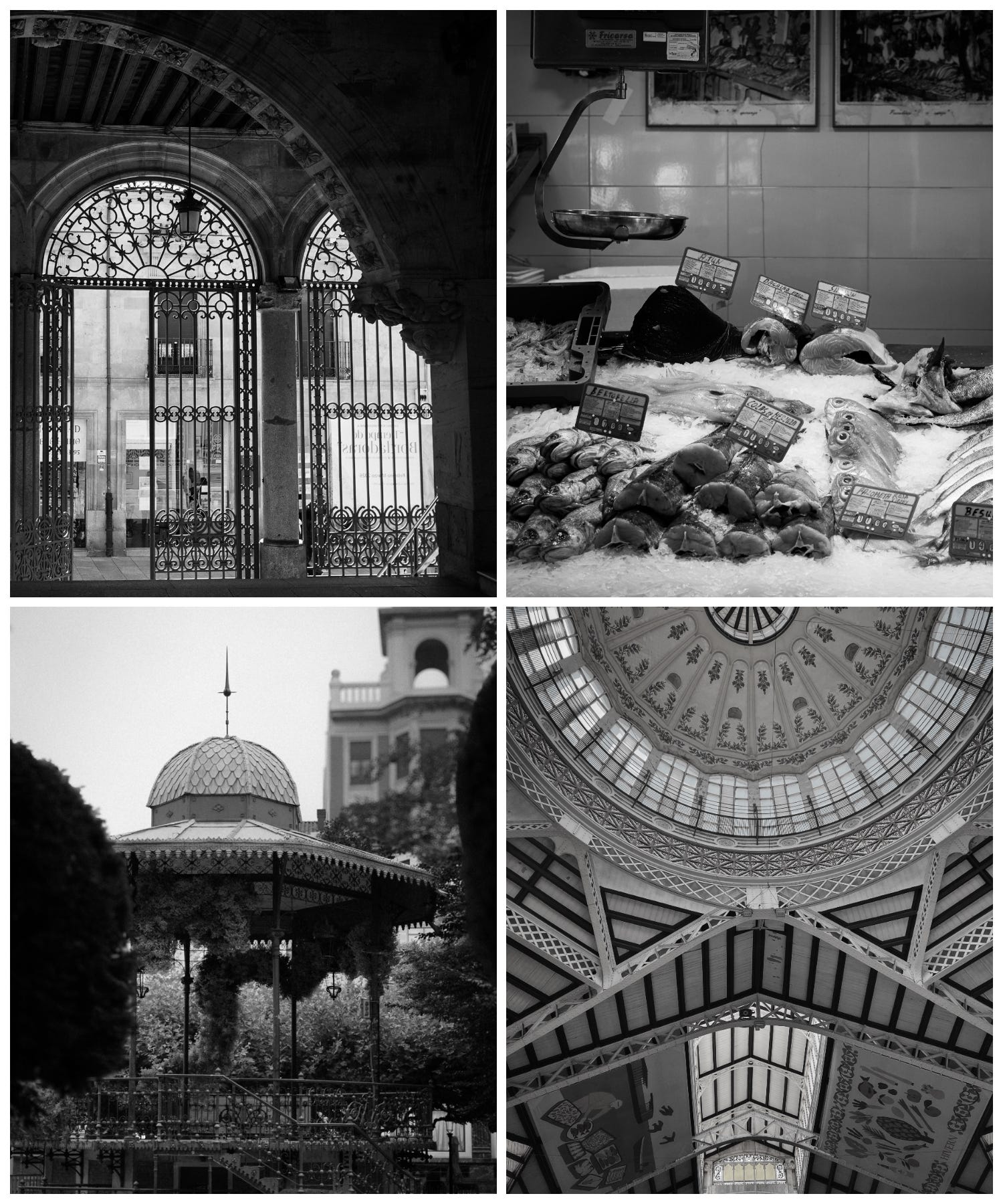
A few trips to Menorca, sometimes combined with Barcelona, started to shift something. Not quite yet, though. It had to grow.
For a long time, the country stayed ‘Spain’ with city names famous through football: Real Valladolid, Celta de Vigo, Real Oviedo, Athletic Bilbao.
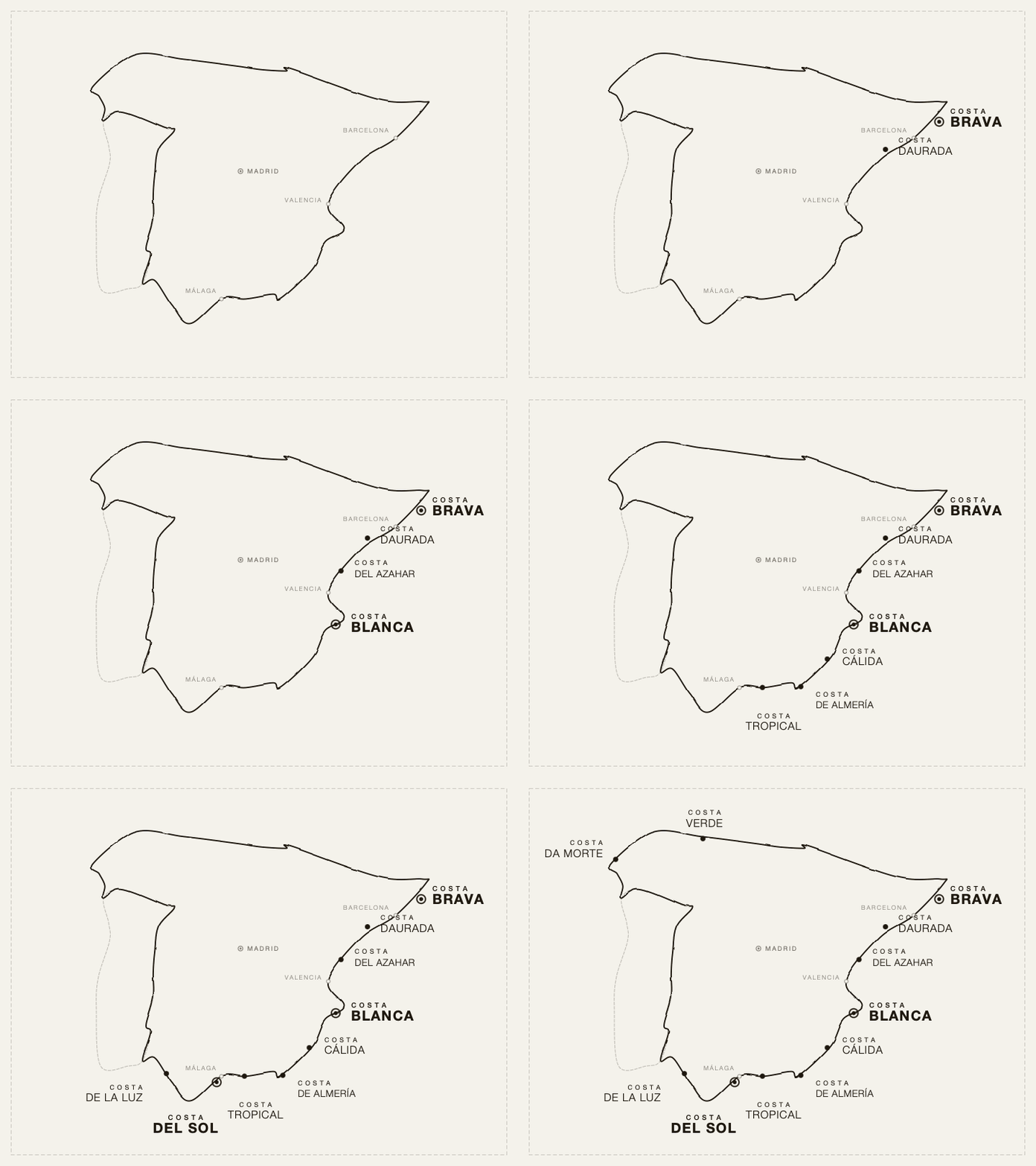
And the Spain of the tourists and the costas: Blanca, Brava, del Sol. People use the names of the costas as if everyone knows exactly where they are. Well, we don’t.
The Spanish rhythm
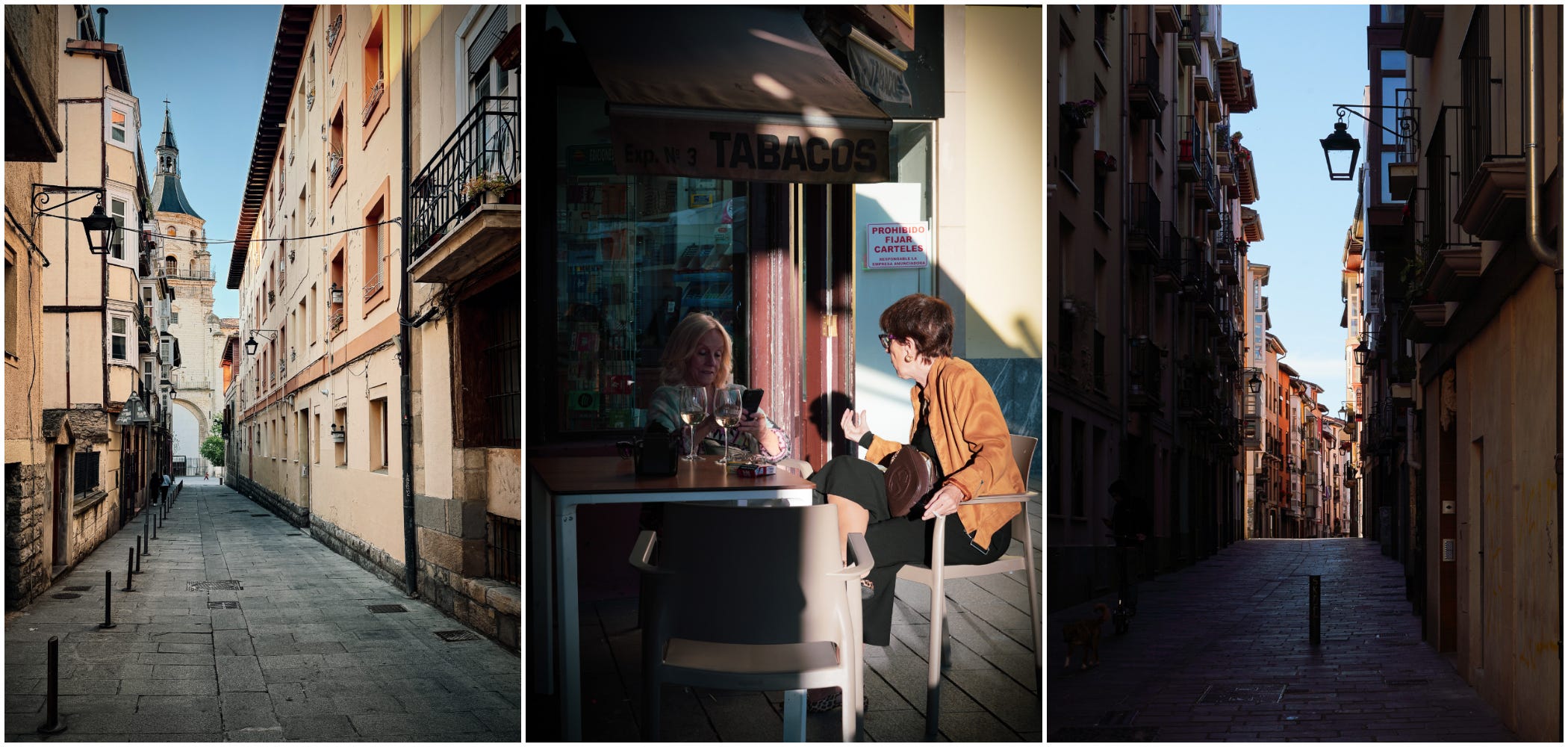
When I started to travel overland, and could take more time, I got to know the country better. The rhythm above all: people sitting under the trees on the terraces, the siesta, the long evenings. Conquer the heat, lean into the food culture. Adjust to the rhythm of the country, or you fall out of tune.
The country is unmistakably charming. The faded colours, the white houses, the cobbled streets, the nostalgic shop fronts, the history everywhere, the grand churches and cathedrals, the bars, and yes, the sun. We can’t deny that one.
Travelling overland: train, bus and car
What I like about travelling overland is how easily the country stitches together, once you stop flying into a single resort and out again. You can follow the green north coast from Porto over the border to Santiago de Compostela, then east through Ribadeo, the Asturian mountains and Oviedo, past the Picos de Europa1 and Santillana del Mar to Bilbao and San Sebastián.
Or cut diagonally up from Lisbon through Salamanca and Burgos into the Basque Country, and on over the border to Bordeaux. None of this is a route to tick off. The trains, buses and ferries simply connect in ways that let you draw your own line, even starting from the other side of the Strait if you like.
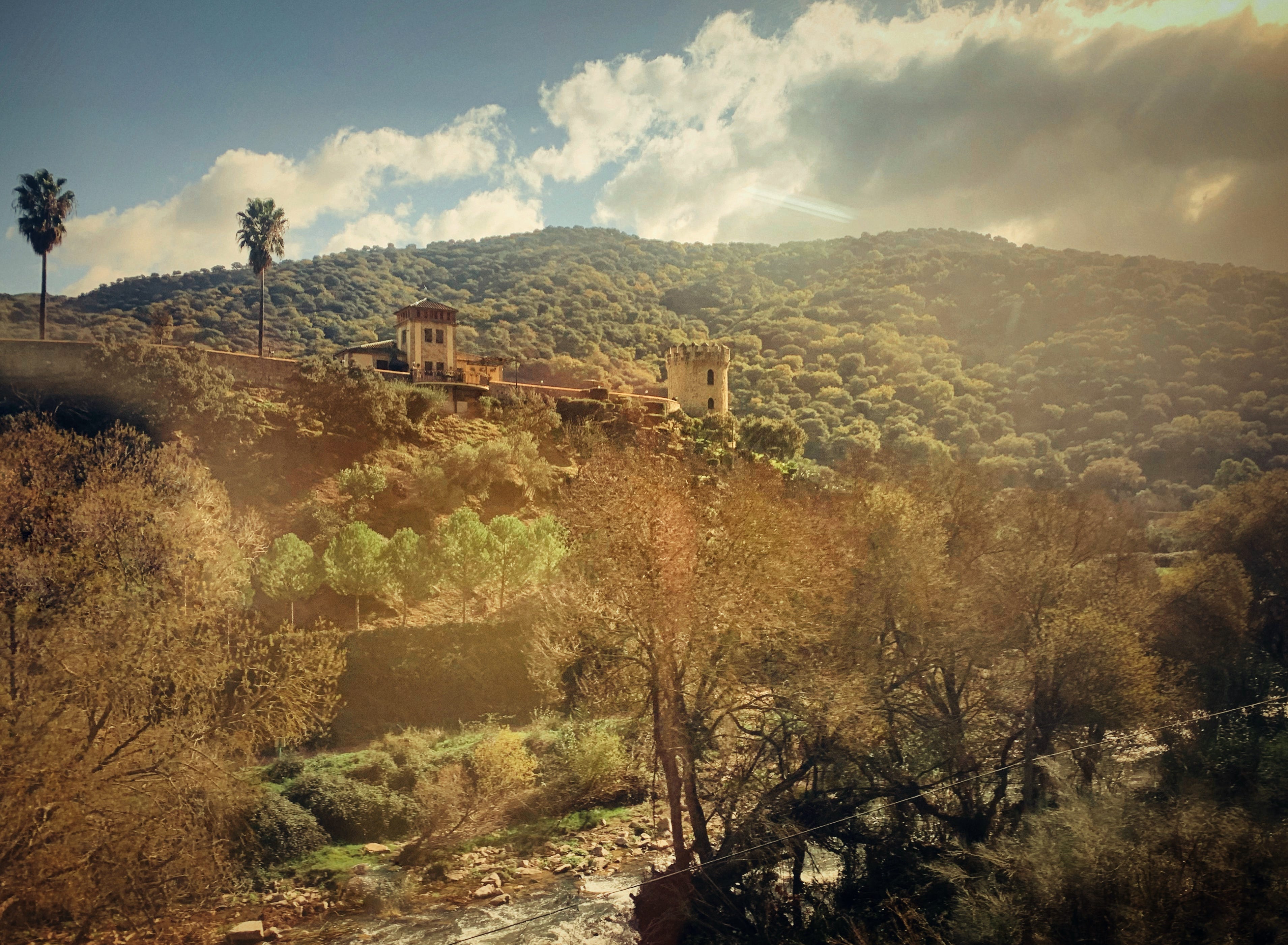
Spain has an extensive rail network: high-speed lines (AVE), intercity and regional services. The main operator is Renfe.
You can travel by train between France and Spain. For example, between San Sebastián and the French Basque Country, or on towards Bordeaux. There is also a direct high-speed service between Barcelona and Paris, run by the French operator SNCF.
Buses are straightforward too. Stations tend to be central or easy to reach by public transport, and Alsa is the best-known operator.
Between Portugal and Spain, you can travel by bus with Flixbus and Alsa. A direct Lisbon–Madrid train is on its way back: the old overnight service ended in 2020, and a new high-speed connection is planned, with a roughly five-hour journey targeted around 2030 and three hours by 2034.
You could take a ferry between Tangier in Morocco and Spain, it’s only one hour between the two continents!2
Renting a car works well too, including one-way hires where you drop off in another city.
Food: markets, raciones, pintxos & fine dining
Of course you know tortilla, jamón, gazpacho, paella, croquetas, tapas. In food, too, Spain thrives on the classics. What is most interesting is the culture around it, the habits. Something to lean into and embrace the rhythm of it.
» Food Markets
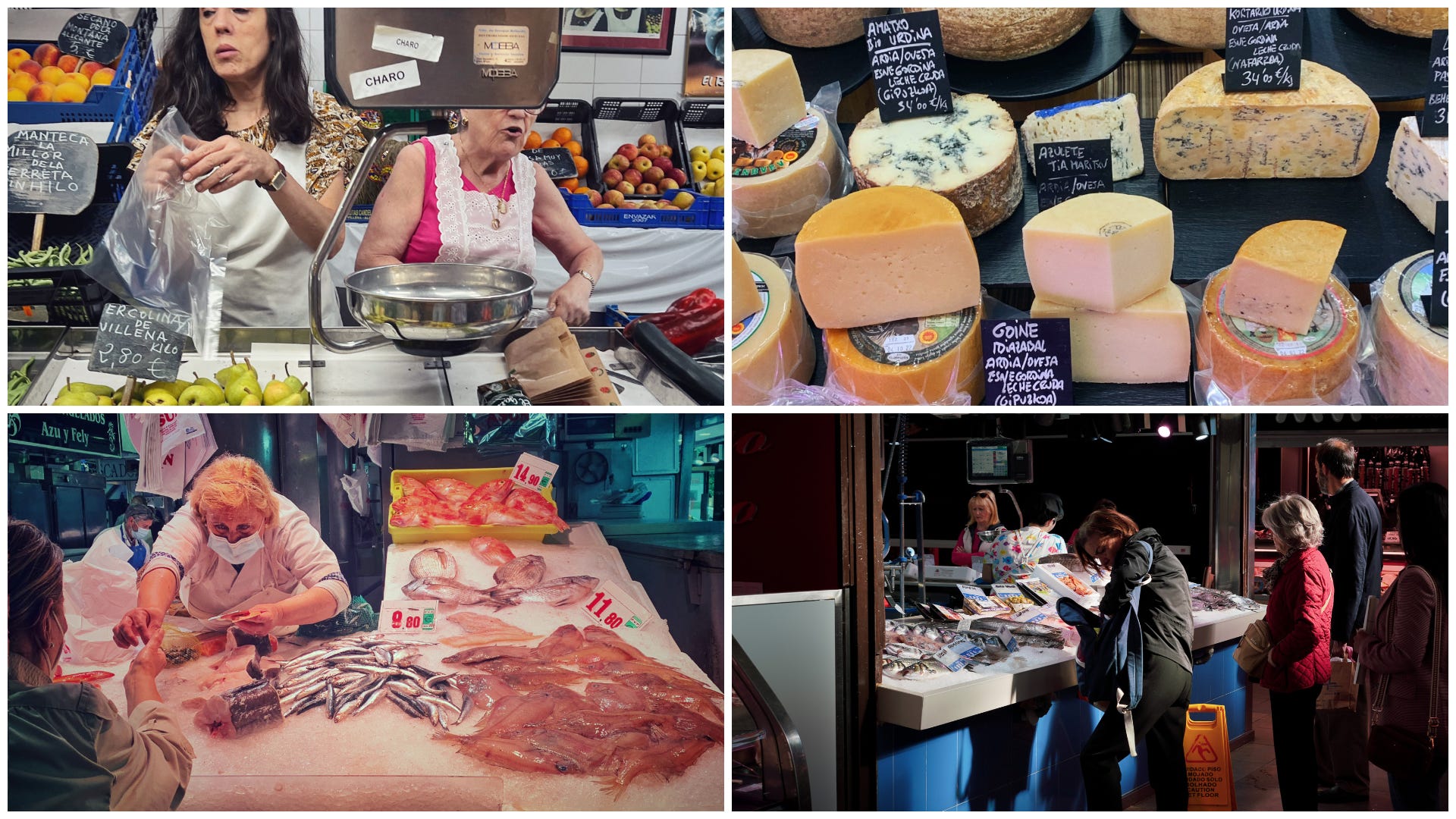
Mercados are a part of life in Spain, and you can find the covered market halls in almost every city. Those buildings can be very beautiful like the one in Oviedo. Most of them are open from the morning until after lunch (around 15:00) and some are also open in the evenings. People come for fresh produce (vegetables, fruit, cheeses, fish, plenty of ham), but also to meet for a coffee, or a glass of wine and a bite.
Mercados for your itinerary:
El Mercado del Val in Valladolid
Mercado El Fontán in Oviedo
Mercado de Abastos Merkatua in Vitoria-Gasteiz
» The bar
In Spain, they would laugh at the north-west European question, ‘are you familiar with the concept of sharing plates?’. They simply sit at the bar, order some tapas or raciones, and share. Those bars are wonderful. Look for an authentic one: buzzing, people standing around with cañas of beer or glasses of wine and a few little plates in front of them.
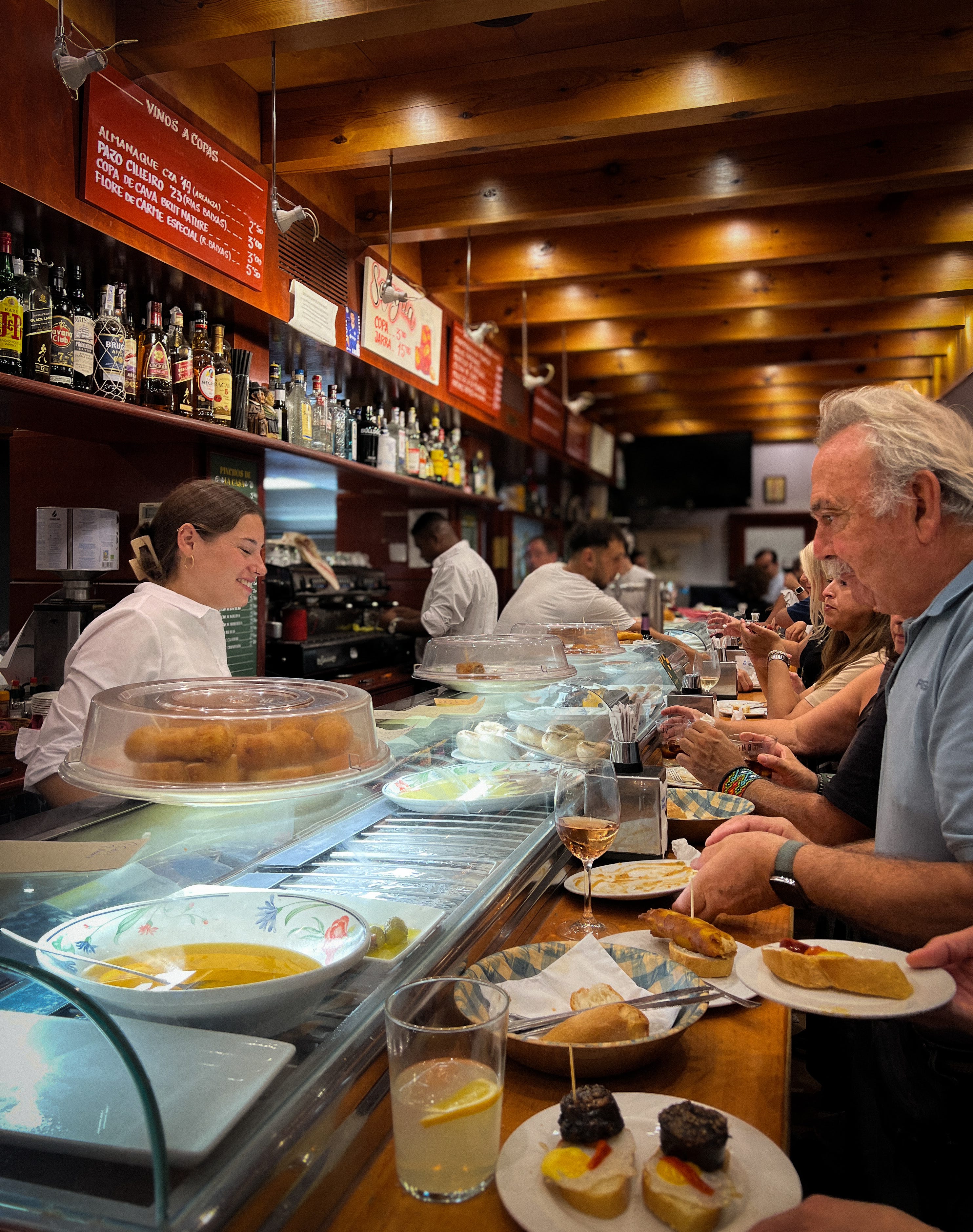
Last year in Burgos, I was sitting at the bar with some plates in front of me. Of course, I ordered too much. Two older ladies behind me had great fun watching me with all that food and asked if I was enjoying it. Yes I was. And another tapa was coming my way.
» Pintxos and the Basque Country
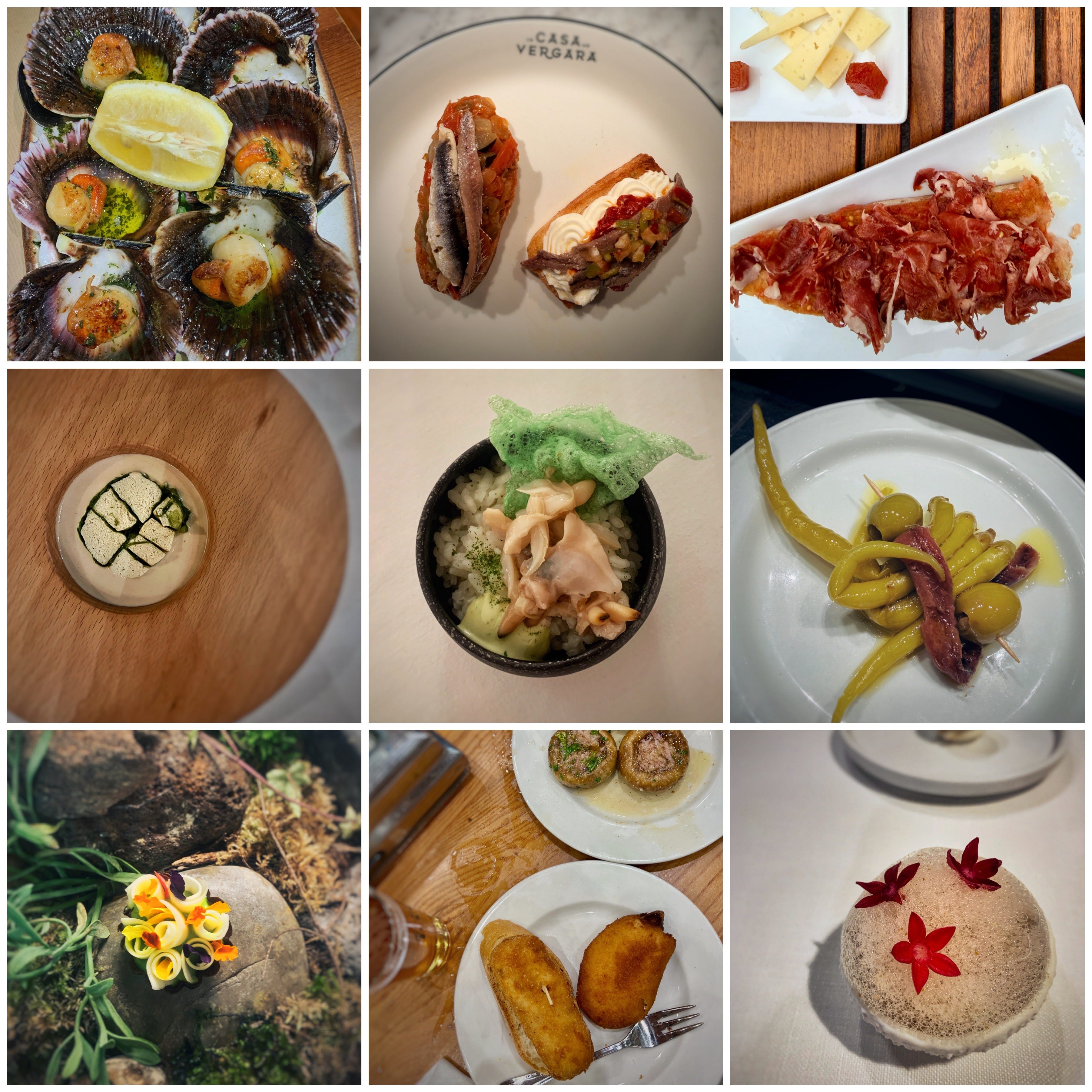
Pintxos are a different league, partly because they are a Basque Country thing, and an important part of the culture there. Often paired with txakoli (a young, slightly sparkling white wine) or cider. San Sebastián3 is one of the most popular places for a poteo (a pintxo crawl): everything is within walking distance, and it is easy to get a Gilda4 and more at several fine bars in the old town and the newer districts. Bilbao is a good base too. And what about a smaller town like Vitoria-Gasteiz? Off-season these cities are far less crowded and just as charming.
» Fine dining
Spain is a serious fine-dining country, with over 300 Michelin-starred restaurants. Not all of them are as expensive as you might assume, and the same goes for the wine list: prices often start around €30 rather than an exorbitant €80, even in three-star restaurants.
I once had a fine-dining experience that sat somewhere between food heaven and a fever dream. After three rooms of amuses (seventeen amuses in total, I think) we were finally seated at our table, where the decoration turned out to be edible. Of course. Then the courses came. Many, many courses. After a few hours, I collared the waiter to ask which course we were on. I had been set off by a cart of shaved ice doing the rounds at another table.
Beyond Plaza Mayor: there’s more to Spain
» The Camino deserves a place here. I have never walked it. Yet. (You never know what you’ll do once you start thinking about mortality.) The thing is, you can’t escape the Camino once you travel through the central and northern regions. That scallop shell is everywhere, and so are the pilgrims. Santiago de Compostela, the famous finish, is a remarkably charming city and worth a few days, not least for watching people walk into the square in front of the cathedral in their hiking gear.
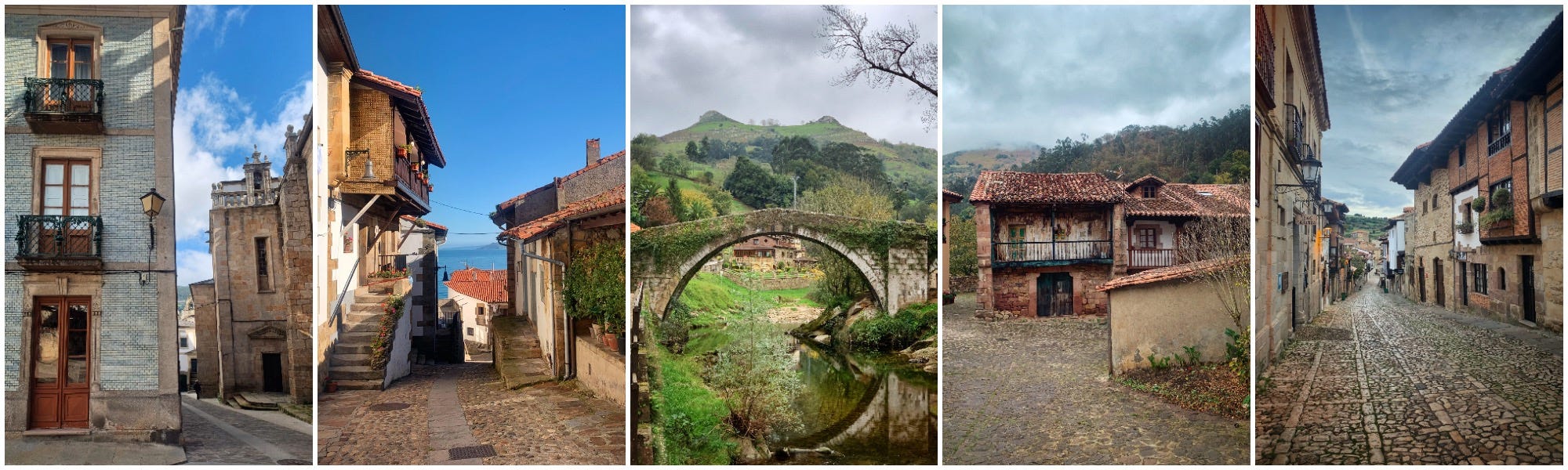
» Spain is full of beautiful villages. Make sure to stop in at least one on a road trip. Off-season some of them can feel deserted, almost like an open-air museum, but then you have the place to yourself. Find them on the Los Pueblos Más Bonitos de España list.
» With artists like Picasso, Dalí, Gaudí and Goya, Spain also has great art museums. Bilbao has, of course, the Guggenheim, but also the Museo de Bellas Artes. In Santander, the Centro Botín, Renzo Piano’s waterfront arts centre, is worth a visit. In Valencia, there is more than the Calatrava buildings, pay a visit to Centre del Carme de Cultura Contemporánea, IVAM or Centro de Arte Hortensia Herrero.
» Spain is famous for sport, and it’s not only football. It also has some very attractive cycling races. And we all know that during those broadcasts you see a lot of the country, including churches and castles. The Vuelta a España is the third Grand Tour of the year – also for women. Spring and summer bring more good racing too, one-day races and shorter tours like the Itzulia Basque Country, the Volta a Catalunya, the Clásica San Sebastián and the Vuelta a Burgos.


Read, Watch, Listen & For Your Agenda
I recently came across My Spain, My Way - a Substack piece by Karen R that captured my hunch about the country.
El Día Menos Pensado (The Least Expected Day), the documentary series about the Movistar cycling team. Highly recommended, especially season one.
The men’s Vuelta a España is planned for 22 August until 13 September. Watch a peloton work its way along the wide, empty tarmac of southern Spain and Andalusia, finishing in Granada.
José Luis Perales is one of Spain’s most famous classic singer-songwriters. Here is a song to brighten up your day:
Until the late 1960s, the tourist marketing of Spain was focused on culture. Then the hugely successful turismo de sol y playa campaign kicked off5.
Spain sold the world beaches, sun and resorts. Benidorm, Torremolinos, Lloret de Mar and co. built their beachfront skylines of ugly hotels, hiding the real Spain. Maybe Spain underestimated itself too.
A beautiful national park! Excellent for hiking. Check parquenacionalpicoseuropa.es
There is a ferry between Tangier and Tarifa and a ferry between Tanger Med and Algeciras (this one is suitable for those with their own car).
Find an overview of the 99 best pintxos of Donostia San Sebastián on this site.
From the 1960s, Franco’s Ministry of Information and Tourism built its campaigns around sun and beach under the legendary slogan ‘Spain is different’, launched in 1964 by minister Manuel Fraga Iribarne. The familiar sun logo, the Sol de Miró, was designed by Joan Miró in 1983 and given to the government free of charge. (Turespaña; The Conversation)
Thanks for the mention!